Hospitality depends on technology, but most hotel operators didn’t enter the industry to manage networks, troubleshoot equipment, or evaluate cybersecurity risks. They entered it to take care of guests and run successful properties.
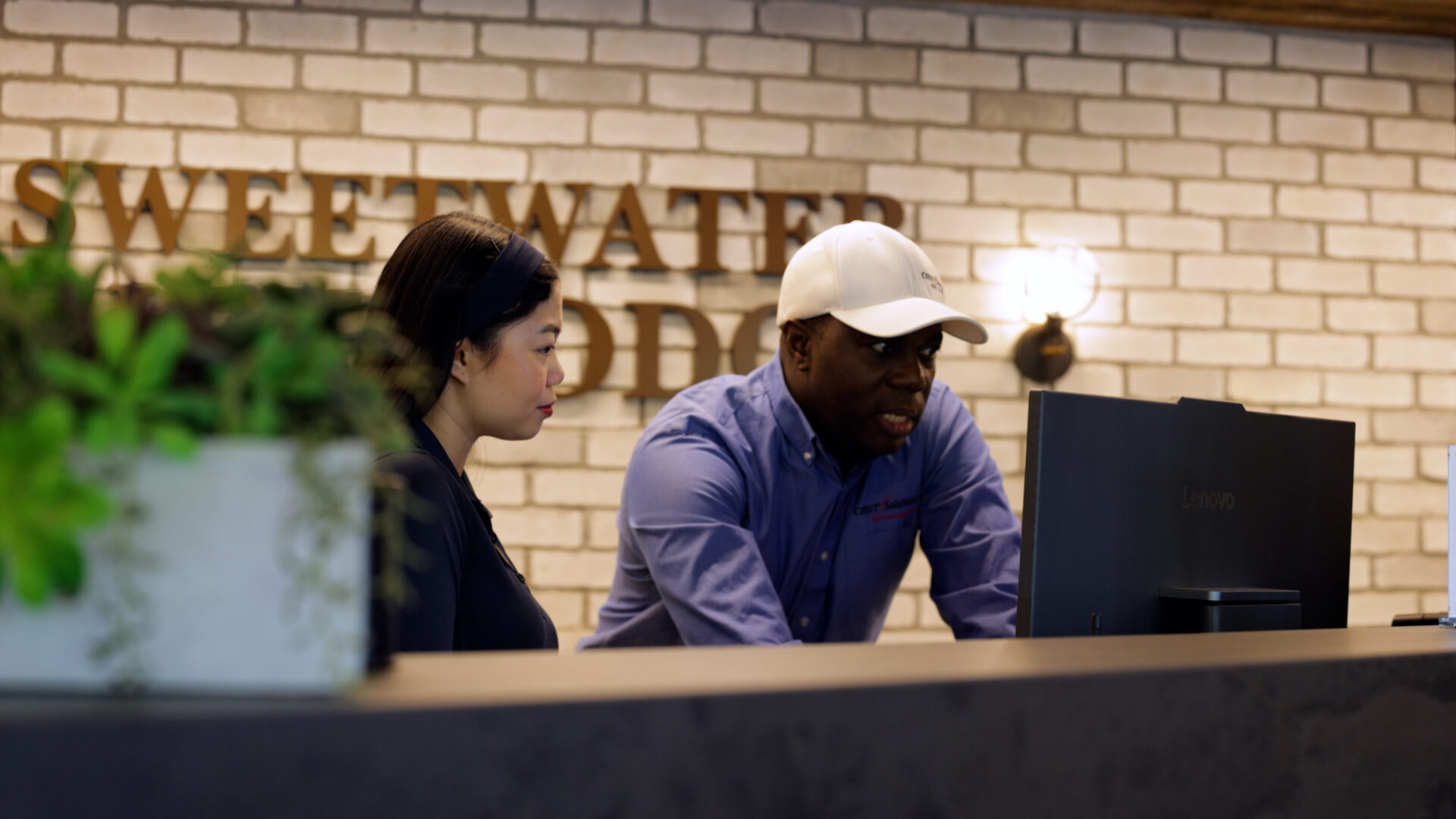
That distinction matters to Rainer, who operates Sweetwater Lift Lodge. We sat down with him in the lobby of this beautiful mountain property to discuss the IT needs of the hospitality industry, his lodge’s unique needs, and what he and his staff value in an IT vendor relationship.
Rainer has worked at Sweetwater Lift Lodge for 10 years. He began as a night auditor, moved through front desk and guest services roles, and gradually assumed responsibility for much of the lodge’s operation.
Over the same period, the property’s technology needs changed significantly. The paper files Rainer remembers from his early years gave way to property management software, digital payment processes, and connected systems that now support daily operations.
Technology made many tasks easier, but it also created a new set of responsibilities. Systems had to remain available. Credit card information had to be protected. Equipment needed to be maintained and replaced. When something went wrong, the lodge needed help from someone who understood both the technology and the property.
When remote IT support isn’t enough
Sweetwater Lift Lodge previously worked with an IT vendor located outside the area. Communication was limited to phone calls, Zoom meetings, and email. That arrangement became increasingly difficult for a property operating in the mountains.
Where the lodge is located, strong winds and snowstorms can frequently interrupt internet access and power. When equipment or connectivity is affected, resolving the problem can require more than a remote support session. The lodge needed an IT team that could respond quickly and provide local assistance when necessary.
CMIT Solutions gave Rainer a local point of contact and a team he could reach even when a problem happened outside regular business hours. He says, “When I call CMIT, even at 12 midnight, they are here for us.”
For a hotel operator, an answered midnight call has a direct operational value. Guests may still be arriving. Front desk employees may still need access to reservations. Payment systems may still be in use. Waiting until the next business day is not always an option.
Local support also gives the IT provider a better understanding of the property itself. The team becomes familiar with its equipment, operating conditions, and recurring challenges. That familiarity can make it easier to determine what can be resolved remotely and when someone needs to be on-site.
Protecting the systems behind the front desk
The property management system is central to hotel operations. It helps the front desk manage reservations, check guests in and out, and keep important information available to employees.
It also brings cybersecurity into the middle of the guest experience. Rainer explains “One of the challenges is property management software, and how you deal with cybersecurity at the same time, because you are dealing with credit cards.”
For Rainer, cybersecurity is not a separate technical project. It is part of operating a system that employees depend on and that handles sensitive payment information.
Protecting that environment requires more than installing security software. A hotel needs to understand who can access its systems, how employee accounts are managed, which vendors connect to the network, and how equipment and software are maintained. It also needs a plan for keeping essential operations moving if a system becomes unavailable.
Those responsibilities can become difficult for a general manager or operations leader to oversee alone. Hospitality teams are already managing guests, staffing, maintenance, occupancy, and ownership expectations. Cybersecurity adds another area where small oversights can create significant problems.
An experienced IT team can take responsibility for the technical details while explaining important decisions in terms the hotel operator can use. That allows security to support the property’s operations instead of becoming another disconnected initiative.
Making practical technology investments
When the lodge needed to change the equipment in its IT room, CMIT helped it complete the work while saving money. The value was tied to a specific project rather than a vague promise that managed IT would automatically reduce every technology expense.
That practical approach matters. Hotels need to know what they are paying for, why equipment should be replaced, and how a proposed change supports the property. They also need help distinguishing between an urgent requirement and an upgrade that can wait.
The cost of IT is not limited to hardware, software, and vendor invoices. There is also a cost when an operations leader spends hours researching equipment, following up with support providers, or trying to resolve technical problems.
Handing those responsibilities to CMIT gave Rainer more time to concentrate on the lodge. He explains, “We can focus on our business growth, and they will take care of the IT aspect of the business.”
That division of responsibility is especially valuable for properties without an internal IT department. The lodge still makes business decisions about its technology, but Rainer does not have to manage every technical task behind those decisions.
Building a relationship around the property
The strongest part of Rainer’s experience is not a particular product or project. It is the relationship he has developed with the people responsible for supporting the lodge.
CMIT has been working in the hospitality space for 20 years and knows how important it is to understand the environment in which a property operates. The team understands why the lodge’s mountain weather affects IT planning, why the property management system requires careful protection, and why a hotel cannot always wait until morning for help.
That knowledge builds over time. It allows conversations to begin with the lodge’s actual needs instead of requiring Rainer to explain the property from the beginning each time an issue occurs. “They’re not just thinking about how much they can make money off us,” he says. They’re thinking about a long-term relationship.”
For a hotel operator, that kind of relationship can make technology easier to manage. There is a familiar team to call, a clearer understanding of who owns each responsibility, and someone available to help evaluate decisions as the property changes.
What hotel operators can learn from Rainer’s experience
Every property has a different technology environment, but Rainer’s experience raises several useful questions for hotel owners and operators:
- Who answers when an essential system stops working after hours?
- Can your IT provider reach the property when remote support isn’t enough?
- Does your provider understand how your PMS handles payment information?
- Who is responsible for maintaining employee access and connected systems?
- Are equipment recommendations explained in business and operational terms?
- How much time does your property team spend managing IT vendors and technical problems?
- Could those responsibilities be handed to a team with hospitality experience?
If the general manager, operations manager, or front desk team is still coordinating most of the property’s IT work, it may be time to reconsider the support model.
CMIT Solutions helps hospitality businesses manage the technology behind reservations, payments, guest service, and daily property operations. Contact a local CMIT Solutions team to discuss where IT responsibilities are consuming your staff’s time or creating risk for your property.