Last year, we shared research from our partner Pax8 showing that artificial intelligence had reached a tipping point for small and midsize businesses. The findings were clear: AI was no longer a future technology. It had become a competitive necessity.
At the time, the numbers were compelling. Research found that 62% of SMBs were already using AI, while 74% believed AI helped them compete more effectively with larger organizations.
Fast forward to today, and the conversation has evolved.
New research from Pax8 suggests that the question is no longer whether businesses should adopt AI. Instead, the focus has shifted to how effectively they are using it, and whether they are moving beyond experimentation into true business transformation.
The latest findings reveal that AI is beginning to change one of the most fundamental assumptions in business growth: the relationship between revenue and headcount.
AI Is Changing the Traditional Growth Model
For decades, business growth followed a relatively predictable pattern.
As companies generated more revenue, they hired more employees. Growth and workforce expansion generally moved together.
According to Pax8’s latest research, that relationship is starting to change.
Organizations are increasingly using AI to improve productivity, automate routine work, accelerate decision-making, and support employees in ways that allow businesses to scale more efficiently. Rather than simply adding headcount to increase output, companies are finding ways to accomplish more with existing teams.
This shift may represent one of the most significant changes in SMB operations in decades.
Last Year’s Question Was “Should We Adopt AI?”
Today’s Question Is “How Mature Is Our AI Strategy?”
The earlier research highlighted widespread adoption and growing enthusiasm for AI.
The new findings reveal something even more important: not all AI adoption produces the same results.
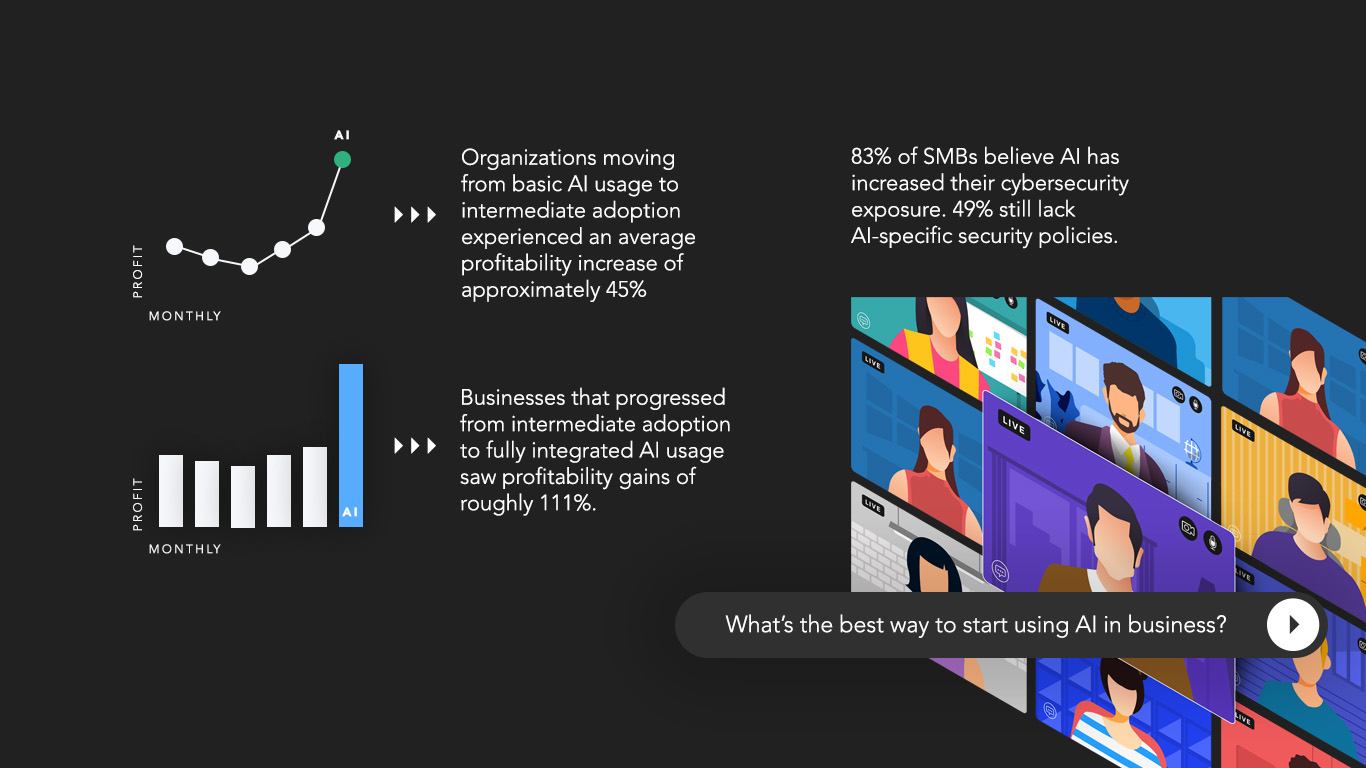
Pax8 found that organizations moving from basic AI usage to intermediate adoption experienced an average profitability increase of approximately 45%.
However, businesses that progressed from intermediate adoption to fully integrated AI usage saw profitability gains of roughly 111%.
Those numbers suggest that the biggest returns don’t come from simply experimenting with AI tools. They come from integrating AI into workflows, operations, customer interactions, and business processes.
In other words, there is a significant difference between using AI occasionally and making AI part of how the organization operates.
AI Leaders Are Pulling Ahead
One of the most interesting takeaways from the research is that a gap is beginning to emerge between AI leaders and AI laggards.
Early adoption created advantages. AI maturity is creating even larger ones.
Businesses that have moved beyond pilot programs are using AI to:
- Streamline administrative tasks
- Improve customer experiences
- Analyze data faster
- Accelerate marketing efforts
- Improve employee productivity
- Support strategic decision-making
These capabilities help organizations move faster while reducing operational friction.
For SMBs, this is particularly important because it allows smaller teams to perform at levels that previously required significantly more resources.
SMBs Still Believe AI Is Essential for Competitiveness
While the conversation has evolved, one thing has not changed.
Business leaders continue to view AI as critical to future success.
According to the latest research, 62% of SMB leaders believe their businesses will not remain competitive over the next three years without AI.
That statistic mirrors the urgency reflected in last year’s findings.
The difference is that leaders are now seeing real-world results rather than simply projecting future benefits.
AI is no longer being evaluated as a potential advantage. Increasingly, it is becoming part of the operational foundation of successful businesses.
Growth Is Accelerating, But So Are the Risks
The newest research also reinforces a concern we discussed in our earlier article: governance is not keeping pace with adoption.
As organizations expand their use of AI, many are introducing new cybersecurity and compliance risks.
According to Pax8:
- 83% of SMBs believe AI has increased their cybersecurity exposure.
- 49% still lack AI-specific security policies.
That creates a significant challenge.
As employees use AI tools to analyze information, generate content, summarize documents, and automate workflows, organizations need clear guidance regarding:
- Data privacy
- Acceptable use
- Security controls
- Regulatory compliance
- Vendor management
- Employee training
Without proper oversight, businesses risk exposing sensitive information or creating vulnerabilities that cybercriminals can exploit.
The Most Successful Businesses Are Pairing AI With Governance
The organizations seeing the greatest value from AI are not simply adopting new tools.
They are creating frameworks that support responsible growth.
Effective AI strategies typically include:
Defined Business Objectives
Organizations identify specific use cases where AI can improve productivity or efficiency.
Security and Privacy Controls
Sensitive information remains protected throughout AI workflows.
Employee Training
Teams understand how to use AI effectively and responsibly.
Governance Policies
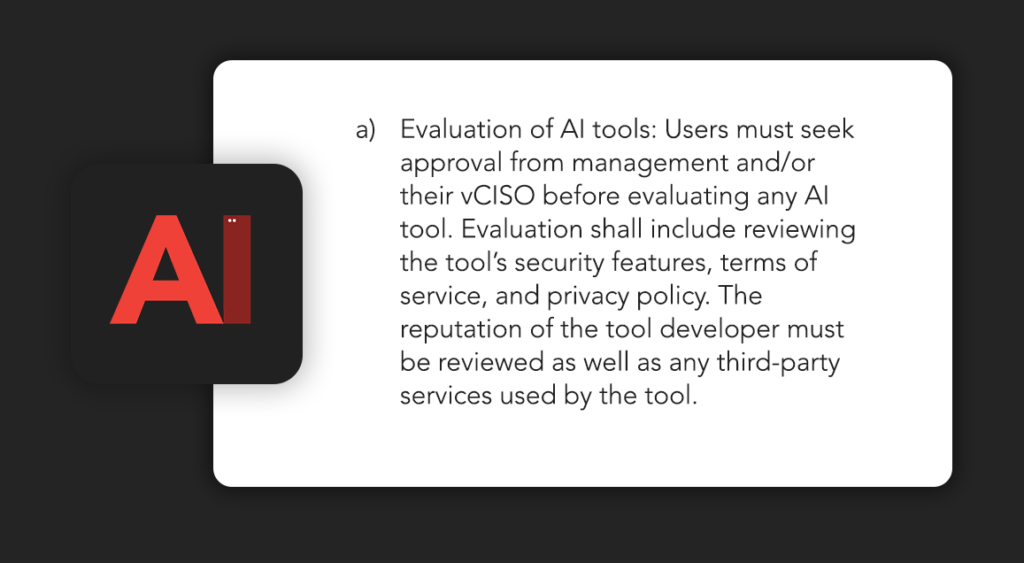
Approved tools, data handling requirements, and acceptable use guidelines are clearly documented.
Ongoing Evaluation
AI initiatives are continuously measured and refined as business needs evolve.
The goal is not just to use AI. It is to use AI strategically.
SMBs Want Trusted Guidance
Perhaps one of the most encouraging findings from the report is that business leaders recognize they do not have to navigate AI alone.
Pax8 found that:
- 70% of SMBs believe outside partnerships are necessary to fully realize the benefits of AI.
- 84% say they would trust a technology advisor to guide AI implementation.
This reflects a growing understanding that successful AI adoption requires more than technology.
It requires planning, governance, cybersecurity, and alignment with business objectives.
The Future Belongs to AI-Mature Organizations
Last year’s research established that AI is no longer optional for SMBs. This year’s findings tell us something even more important.
The businesses seeing the greatest gains are not necessarily the ones using the most AI tools. They are the organizations that have moved beyond experimentation and developed mature AI strategies that support growth, efficiency, and innovation.
As AI continues to evolve, the competitive advantage will increasingly belong to businesses that can combine adoption with governance, productivity with security, and innovation with strategy.
At CMIT Solutions, we help organizations evaluate AI opportunities, strengthen cybersecurity, establish governance frameworks, and implement AI solutions that support long-term business goals. Whether you’re exploring AI for the first time or looking to mature your existing strategy, our team can help you move forward with confidence.
Ready to take the next step in your AI journey? Contact CMIT Solutions today.