The shorthand most SMB leaders find useful: automation is the hands, AI is the brain, AI productivity is the daily habit of using both, and AI-powered automation is what happens when the brain and hands work together at scale.
At CMIT Solutions, we help small and mid-sized businesses understand the practical differences between secure AI, AI productivity, and AI-powered automation so they can adopt the right tier without exposing their data or operations. Each layer builds on the last, and each calls for different security controls, employee policies, and IT support.
Most business owners hear “AI” as one big concept. In reality, the way an SMB uses AI breaks into three distinct tiers, each with its own goals, risks, and readiness requirements.
If you want a guided path through any of these tiers, explore CMIT’s managed AI services.
What is the main difference between secure AI, AI automation and AI productivity?
The main difference between secure AI, AI automation, and AI productivity is the purpose each one serves:
- Secure AI governs how AI tools are used safely
- AI productivity helps employees work faster with AI assistance
- AI automation connects AI to business systems so processes run with minimal human input.
Beyond the tier framework, it helps to separate the underlying technologies. Many SMBs treat these as interchangeable, which leads to mismatched expectations during rollout.
- Automation refers to rule-based systems that follow predefined instructions. If a condition is met, the system performs a set action. Traditional automation does not learn or adapt.
- AI refers to systems that interpret information, generate responses, and adjust output based on context. Generative AI tools such as ChatGPT and Microsoft Copilot fall into this category.
- AI productivity is the practice of equipping employees with AI tools to perform their daily work more effectively. It is a usage pattern, not a technology in itself.
- AI-powered automation is what happens when AI capability is layered onto automation infrastructure. The system can both follow rules and interpret new inputs, which means it handles a much wider range of tasks without human intervention.
What is Secure AI?
Secure AI is the foundation tier. It covers the controls, policies, and oversight that allow a business to use AI tools safely without exposing sensitive data, breaching compliance obligations, or losing visibility into how employees interact with AI.
Many SMBs face growing IT complexity and cybersecurity uncertainty the moment employees start experimenting with generative AI on their own. Without guardrails, that experimentation creates data exposure faster than it creates value.
At this tier, the goal is not to maximize AI output. The goal is to make sure any AI use in the business happens inside a controlled environment, with approved AI automation tools, defined data boundaries, and a clear acceptable use policy.
Secure AI typically includes:
- Safe access to AI tools: Restricting which AI applications employees can use, often through identity and access management.
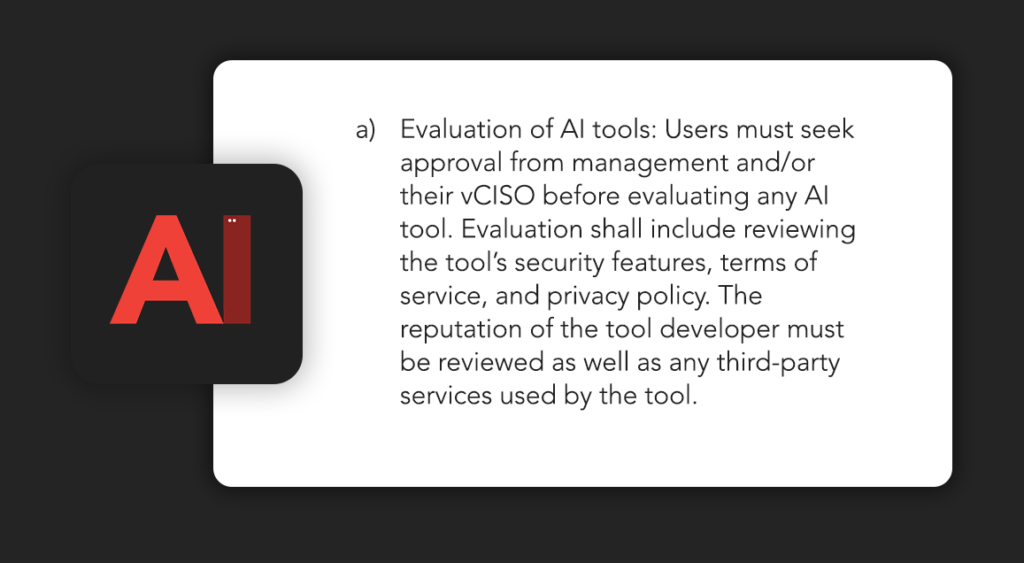
- Acceptable use policies: Written rules that define what data can and cannot be entered into AI tools.
- Visibility into AI usage: Logging and monitoring so leadership knows which tools are being used and how.
- Risk identification: Detection of shadow AI, unsanctioned tools, and risky prompts.
- Employee safety training: Practical guidance for staff on prompts, data handling, and approval workflows.
For SMBs, Secure AI is the minimum standard before any productivity or automation work begins. CMIT Solutions builds this layer with security-first managed IT services so the foundation stays protected as the business adopts more AI capability.
Additional reading: how to secure AI
What is AI Productivity?
AI Productivity is the second tier. It applies AI tools to the daily work of individual employees and teams to save time, improve output quality, and reduce repetitive effort. This tier sits on top of a secure foundation.
When productivity tools roll out without a security layer underneath, gains often come with hidden data exposure and inconsistent governance across teams. That is the risk CMIT helps SMBs avoid.
The focus here is guided enablement. Employees use AI to draft communications, summarize documents, gather research, build reports, and accelerate routine work. The work still belongs to the person; AI is the assistant.
Common AI Productivity use cases for SMBs include:
- Faster research and information gathering: Pulling key points from long documents, internal knowledge bases, or industry sources.
- Department-specific workflows: Marketing, finance, HR, and operations each adopt AI tools suited to their tasks.
- Reduced repetitive daily tasks: Drafting recurring emails, summarizing meetings, or generating first-pass content.
- Employee AI coaching: Helping staff write better prompts and use approved tools more effectively.
For this tier to deliver value, the Secure AI controls underneath it must be working. With cybersecurity-informed recommendations and strategic technology guidance, CMIT helps SMBs roll out productivity tools in a way that produces measurable gains without quietly opening new risk.
Additional reading: how to use AI to increase productivity

What is AI-powered Automation?
AI-powered automation is the most advanced tier. It connects AI to business systems and workflows so that processes run with limited human intervention. This is where AI moves from assisting individuals to running parts of the business itself.
Automation introduces a new kind of operational risk: when a process runs on its own, errors and exposures scale just as fast as efficiency does. Without trusted long-term technology guidance, that scale can work against the business.
This tier requires both secure AI and AI productivity to be in place. Without those foundations, automating processes with AI multiplies risk rather than reducing manual work.
AI-powered automation typically includes:
- Automated repetitive business tasks: Invoice processing, data entry, ticket triage, and similar high-volume work.
- AI connected to business systems: Integrations between AI tools and platforms such as CRMs, accounting software, and document management systems.
- Streamlined internal workflows: End-to-end processes that move information across teams without manual handoffs.
- AI-powered reporting and insights: Dashboards that summarize performance data and flag anomalies.
- Ongoing AI optimization: Continuous review and refinement of automated workflows as the business changes.
This is where SMBs realize compounding operational gains, provided the underlying governance and security work has been done. CMIT’s nationwide network of 900+ IT and cybersecurity professionals supports this stage with shared tools, standards, and continuous monitoring across locations.
Additional reading: AI automation
The AI Transformation Framework: a side-by-side comparison
The clearest way to compare these tiers is to map them against the practical capabilities each one delivers. The framework below reflects how CMIT Solutions structures AI adoption for SMB clients.
| Secure AI | AI Productivity | AI-Powered Automation | |
| AI assessment | Security assess | Productivity assess | AI-powered assess |
| AI Support | ✓ | ✓ | ✓ |
| Safe AI usage policies | ✓ | ✓ | ✓ |
| Identify risky AI activity | ✓ | ✓ | ✓ |
| Employee AI safety training | ✓ | ✓ | ✓ |
| User and access setup | ✓ | ✓ | ✓ |
| Protect sensitive business data | ✓ | ✓ | ✓ |
| AI usage visibility | ✓ | ✓ | ✓ |
| Faster research and information gathering | ✓ | ✓ | |
| Department-specific AI workflows | ✓ | ✓ | |
| Reduce repetitive daily tasks | ✓ | ✓ | |
| Employee AI coaching | ✓ | ✓ | |
| Automate repetitive business tasks | ✓ | ||
| Connect AI to business systems | ✓ | ||
| Streamline internal workflows | ✓ | ||
| AI-powered reporting and insights | ✓ | ||
| Ongoing AI optimization | ✓ |
Each tier inherits the capabilities of the one below it. A business cannot skip secure AI and start at automation without taking on serious data exposure and compliance risk. CMIT designs the IT environment around the tier that fits the business today, with room to grow as readiness improves.
Not sure whether your business is ready for secure AI, productivity tools, or automation? Complete our free AI self assessment to receive a personalized readiness score and practical recommendations.
How SMBs should sequence adoption
Sequence matters. SMBs that try to deploy advanced AI without the underlying governance create exposure faster than they create efficiency. Without a clear order of operations, even well-intentioned AI projects stall or create incidents.
A reasonable adoption sequence for most SMBs looks like this:
- Establish secure AI controls: Define approved tools, write an acceptable use policy, restrict shadow AI, and train employees on safe prompts and data handling.
- Expand into AI productivity: Identify which departments will benefit first, roll out approved tools, and provide coaching as employees build the habit.
- Move into AI-powered automation: Identify high-volume, rules-driven processes that AI can take over once monitoring and oversight are mature.
- Optimize continuously: Review tool usage, refine policies, retire ineffective tools, and adjust as new AI capabilities become available.
The cost of skipping straight to automation can include unplanned downtime when a workflow misfires, productivity loss while teams untangle a bad rollout, or even insurance complications. CMIT’s IT downtime calculator helps SMBs quantify what disrupted workflows cost their business.
Where compliance and AI intersect
For SMBs in regulated industries, AI usage intersects directly with existing compliance obligations. The tier you operate at determines how much risk surface you need to govern and how much trusted guidance the business needs around it.
- Healthcare practices: Generative AI tools may receive protected health information through prompts, creating HIPAA exposure if not controlled.
- Government contractors: AI tools may inadvertently process controlled unclassified information. Government contractors should review their controls alongside CMMC compliance services to make sure AI use does not undermine certification.
- Retailers and hospitality: AI usage that touches payment information can affect PCI-DSS posture.
- Finance and professional services: AI-generated outputs used in financial reporting can create SOX audit trail gaps.
- Any business processing personal data: GDPR and CPRA both apply to AI tools that process personal data of EU or California residents.
These overlaps mean the Secure AI tier is not optional for regulated SMBs. It is the layer that protects the rest of the compliance program. Authoritative guidance on building this layer is available through the NIST AI Risk Management Framework.
A hypothetical scenario: how the tiers play out
Picture a 60-person healthcare practice that decides to “start using AI.” Without a framework, the practice rolls out a public AI assistant to all staff and tells them to use it however they like.
Within a few weeks, a billing coordinator pastes a spreadsheet of patient names and procedure codes into the tool to draft a payer appeal letter. The data leaves the practice’s controlled environment. There is no log of what was shared, no record of which staff are using which tools, and no policy the practice can point to during an audit.
Now picture the same practice running the framework in order:
- Secure AI controls define approved tools and prohibit PHI inputs.
- AI Productivity rollout focuses on document summarization and patient communication drafting within approved tools
- AI-Powered Automation later connects an approved tool to the EHR for routine documentation tasks, with oversight and logging in place.
Same staff, same workload, fundamentally different risk profile. The difference is not the tools. It is the framework, the policies, and the IT partner managing the environment.
Additional reading: AI acceptable use policy

How insurance readiness ties into AI adoption
Many businesses assume their cyber insurance will cover them after an AI-related incident, but insurers increasingly ask about AI usage policies, monitoring, and data exposure controls before approving or renewing coverage. An AI deployment that lacks visibility or governance can create gaps in coverage at the exact moment a business needs it most.
Use our insurance readiness assessment to see whether your current security environment, including how your team uses AI, aligns with modern insurer expectations.
Move forward on AI with a partner that knows the path
Adopting AI without exposing your business is not a one-time project. It is a sequence of decisions about tools, policies, and controls that need to evolve as both AI and your business change. With more than 30 years of experience, a nationwide network of 900+ IT and cybersecurity professionals, and a security-first approach built into every engagement, CMIT Solutions guides SMBs through each tier of AI adoption.
We help businesses align AI decisions with operational goals, protect sensitive data with layered controls, and build the kind of strategic technology guidance that turns AI into a real driver of growth rather than a source of risk.
Our work with Optyx, a multi-location optical retailer, shows what this looks like in practice. CMIT unified its IT across locations with consistent, secure infrastructure that supports productivity without sacrificing oversight. You can watch the full story through our Optyx case study.
Secure AI adoption starts with clear guidance for employees. Download our free AI acceptable use policy to establish responsible rules for AI tools, company data, and everyday use.
FAQs
How fast can a small business roll out Secure AI controls?
Most SMBs can establish baseline secure AI controls in 30 to 60 days. The timeline depends on how many AI tools are already in use, whether an acceptable use policy exists, and how mature identity and access management is. Phased rollouts work better than full pauses on AI usage.
Do different departments need different AI policies?
Yes, most of the time. A marketing team using AI for content drafting handles different data than a finance team running analysis or a clinical team handling patient information. A central acceptable use policy sets the baseline, and then department-specific guidance covers the data types and tools each team uses.
What if employees already use AI tools without approval?
This is called shadow AI, and it is one of the most common SMB risks today. The first step is visibility, not punishment. Identify which tools are in use, what data has been entered, and which staff are involved. From there, decide which tools to sanction, replace, or block.
Can cyber insurance be affected by how a business uses AI?
Increasingly, yes. Insurers now ask about AI usage policies, monitoring, and data exposure controls during underwriting and renewal. Carriers expect businesses to know which AI tools are in use and what data those tools can access, similar to how they evaluate other key cybersecurity controls.
What size business needs AI-powered automation?
Most SMBs should not start there. AI-powered automation delivers value once a business has consistent, high-volume processes that are well-documented and stable. Companies with 50 or more employees and mature workflows usually see the strongest return. Smaller teams typically get more value from AI productivity first.